Posts

Operation Sindoor: A decisive strike on terrorism, but its backers remain unfazed.

Image
Exactly five days after my previous op-ed, lamenting at the lack of action by the Indian establishment to such a vile act of terror, a decisive act of retaliation was carried out by the Indian armed forces in the form of Operation Sindoor: a tri-service coordinated series of missile, drone and airstrikes across the length and breadth of Pakistan, hunting for the terrorists, and their hideouts in the terror state. Within minutes, many terror hideouts found themselves as no more than rubble, incapable of serving as launchpads for terror attacks against India for the foreseeable future. The ensuing retaliations, escalations and broader conflict that lasted for four days, served as some of the most tense and heated times the country had seen since the Bangladesh Liberation War of 1971. Drone swarms, missile strikes, naval threats, fighter jets, air defence, you name it, and it was on the cards. One could say that it was a war for all intents and purposes, in all but name. India claims that...

The musings of an Indian on the Pahalgam attack and its aftermath.

Before I start this op-ed, I extend my deepest condolences to the victims and families affected by the dastardly and heinous terrorist attack that occurred in Pahalgam in the UT of Jammu and Kashmir on the 22nd of April, 2025. I write this op-ed with anguish, sadness, and anger against the perpetrators of this evil terrorist incident, with a deep longing for justice. I write this op-ed reflecting my musings on this situation and India's response to it. Post the attack, the Prime Minister assured the nation that we would pursue the perpetrators to "the ends of the earth". The subsequent whirlwind meetings held by the Prime Minister at 7, Lok Kalyan Marg (his official residence) suggested an imminent military response to a scale never seen before, being in the works in a clandestine and secretive manner. The admittedly historic decision to hold in abeyance the 1960 Indus Water Treaty, a treaty having survived 3 full-scale wars without issue, reflected India's deep desir...

The Euroquestion.

Image
This article is the final one of a series of reports called "The Euroquestion" where we explored the individual future prospects of the leading nations in the European Union. This article now delves into the collective prospects of the EU as a bloc and explores its destiny. The European Union has been widely touted as the largest integrated single market in the world. It has served as a role model for economic cooperation organisations around the world, on how effective and efficient economic integration can be achieved on a bedrock of cooperation and consensus. Although it has seen its fair share of problems, the general consensus is that the EU as an economic entity has achieved relative success. With a combined gross domestic product (GDP) of US$20.3 trillion, counting the EU as a single entity, it is the 3rd largest economy in the world after the US and China. A wide variety of exports, free economic and political movement between member states, and a heavily integrated, ...

The Euroquestion #3 | Italy

Image
This article is a part of a new series of reports called "The Euroquestion" where we explore the individual future prospects of the leading nations in the European Union, and then delve into the collective prospects of the EU as a bloc and explore its destiny. Italy, being one of the "Big 3" economic powers of Europe, is in a period of great flux, both in its internal affairs, as well as its affairs within the European Union. As one of the few countries in Europe that are ruled by a right-wing government, namely the Fratelli d'Italia (Brothers of Italy) under the incumbent prime minister Giorgia Meloni, it is signalling a shift from its traditional post-WWII stances, through tougher stances on immigration and economic austerity. With a gross domestic product (GDP) of US$2.46 trillion, Italy is a major player in the economic affairs of the European Union, with its famed luxury goods, products and automobile industries, with a perception of luxury and quality asso...

The Euroquestion #2 | France

Image
This article is a part of a new series of reports called "The Euroquestion" where we explore the individual future prospects of the leading nations in the European Union, and then delve into the collective prospects of the EU as a bloc and explore its destiny. France's president Emmanuel Macron has just concluded a pivotal visit to the United States, where Ukraine was taken up along with many other significant issues. This visit is proving to be a consequential visit for the future of the war in Ukraine, and its future course. Through this step by the French government, France is seeming to signal its intent of assuming a more proactive role in European security policy, with regards to its internal security, as well as outside the European Union, with its advanced involvement in the Indo-Pacific, through its strategy for the region. With a nominal GDP of US$3.2 trillion, France is one of the three leading economies of the European Union, and with a GDP growth of 0.7% in 2...

The Euroquestion #1 | Germany

Image
This article is a part of a new series of reports called "The Euroquestion" where we explore the individual future prospects of the leading nations in the European Union, and then delve into the collective prospects of the EU as a bloc and explore its destiny. Germany has just concluded its federal snap elections, where the centre-right Christian Democratic Union along with its sister party, the Christian Social Union of Bavaria looks set to form the incoming government under the chancellorship of Friedrich Merz. As of now, the coalition partner remains undecided, but the CDU/CSU looks to be in the driver's seat in terms of the broad governing agenda. Today, Germany is suffering from widespread economic stagnation with its gross domestic product (GDP) contracting by 0.2% in the 2024 calendar year and by 0.3% in 2023. This is considered a recession by most economists, which does not bode well for a country claiming to be the "economic leader" of the European Unio...

World (trade) War III has begun*.

Image
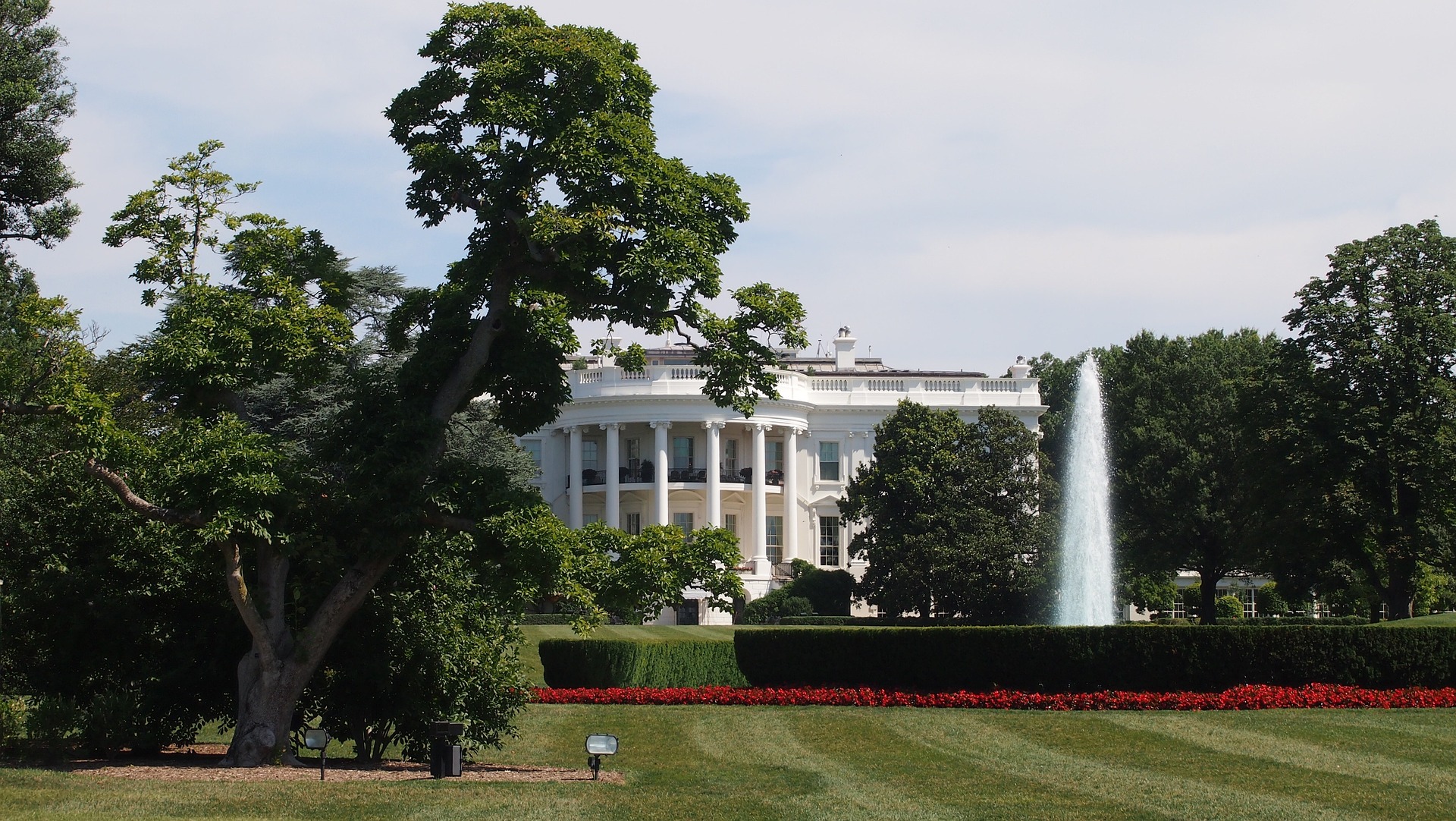
The White House I, Daniel Schwen, CC BY-SA 3.0 <http://creativecommons.org/licenses/by-sa/3.0/>  via Wikimedia Commons The United States under the current administration, has started to leverage its position in the global order by means of weaponizing its economic dominance. This has come at quite a tumultuous time for the global order, and global economic politics. The US has declared that it will impose a tariff of 25% on goods from Canada and Mexico, with China facing an additional 10% tariff over and above the existing rate 1 . This reflects the US' increasing desire to distance itself from the global economic order, or rather its role in the global economic order of propping up its allies. This move signifies arguably the most significant economic policy shift since World War II, when the US started to dole out money to stop the spread of communism into Europe under the Marshall Plan. The new America is a nation that is looking to create an own "walled garden" ...

Opinion | The Indian social mindset needs to change, but it probably never will.

Image
 What makes a great nation-state, great? Is it its economy? Its military strength? Its soft power, perhaps? While all these are the right questions and the answer to all of them is YES (to a certain extent), there is a crucial piece of the puzzle that is very often overlooked. So much so, that due to the overlooking of this factor, many great nations that should have risen to power, either did not manage to do so, or missed the bus leading to greater difficulty in achieving their supreme national interests. The single greatest catalytic factor in the rise of a nation, is the national mindset. A collective state of mind that reflects a nation's priorities, opinions, values and beliefs. Here, values and beliefs are referred to in more a materialist, pragmatic sense, rather than the usual cultural or traditional sense. The priorities of a collective, such as a society or in this case, a national collective frame of mind, is very well reflected by how its populace views the world aroun...

India's silent guardian: The role of the R&AW in national power and intelligence.

Image
CGO Complex, New Delhi. Widely believed to be the headquarters of the Research and Analysis Wing. Zzaamm / Commons CC-BY 3.0 Entebbe. Cyclone. Rubicon. Jungle. Condor.  What do these names have in common? These are the codenames of highly sensitive and clandestine operations of the Mossad, CIA, and MI6. Highly trained, highly adept and highly efficient world-class intelligence agencies, capable of carrying out unprecedented operations across the seven seas.  What do they also have in common? Their home countries are known to be great powers known to dramatically influence and shape global perspectives and outlooks, with copious amounts of soft and hard power to boot. Through such organisations, select polities around the world are able to exert an unprecedented amount of power and influence in the global soft power war, and through the power of perceptions and public opinions alone, are able to change opinions, spark rebellion, and topple regimes thousands of kilometres away. ...

Narrative as a catalyst and compass of national interest.

Image
Raisina Hill at night. Shaurya Singh / Pixabay "It is not a matter of what is true that counts, but a matter of what is perceived to be true."  These are the words of the former US Secretary of State, and former National Security Advisor under the Nixon administration Henry Kissinger, on the power of perspective and good storytelling in the world of realpolitik, which many consider him to be the harbinger of, which enabled America to diplomatically annihilate any and all threats to American interests.  Today, these words hold unprecedented credence given the current geopolitical situation prevailing in the world. Many polities today are not able to effectively advance their national interests, simply due to a lack of narrative and/or ability to advantageously propagate a set narrative that is conducive to the national interest. Taking India's case specifically, it has been a historical drawback that it has never been able to effectively communicate its narrative and stanc...

Opinion | Enough is enough. It's time for India to pursue its classic style of strategic autonomy.

Image
The White House.  Andreas H. / Pixabay In recent years, the India - US relationship has been seen by many in the international relations community to be blossoming due to the common adversary of both countries - an increasingly imperialistic and hegemonistic China. The US sees India as a crucial geopolitical hedge against China in the Indo-Pacific region, and also sees India as a regional buffer and security bulwark should the unthinkable happen. But today, the US is increasingly making incredibly unusual moves on the global geopolitical chessboard as tensions flare up in the two most consequential wars of the decade. And now adding to the bizarre moves, is a strong reaction to an alleged "plot by an Indian citizen associated with the Indian Government" to murder a Khalistani extremist. The US has taken the India...

G20 Special Part II: How the world order is being reshaped on its sidelines.

Image
The 'official' outcomes of the G20 summit in Delhi were many. Statements were made, documents were signed, dinners were held, and decisions were made. The G20 became more representative, politically and socially inclusive, and covered a wider range of issues than ever before. This blog is the second part of a two-part blog series on the G20 summit in Delhi. The first part, where the G20 summit's official outcomes, the decisions made under its framework, and the Delhi Declaration have been discussed in detail, can be found here -  G20 Special Part I: The Delhi Declaration and its outcomes. But the official summit served as a facade for the actual big meetings, big decisions, and big agreements made on its sidelines, that aim to reshape the world order. The decisions taken on its sidelines may change the way that the East trades with the West, the power dynamics between the East and the West, cementing India's global stature as an emerging superpower capable of leading po...

G20 Special Part I: The Delhi Declaration and its outcomes.

Image
India has managed to pull off a feat that was once considered to be near impossible: Forging a consensus, and signing a declaration despite the deep divisions that loom large on the world. This is widely considered to be a diplomatic win for India as it takes its place on the high table of global affairs. This blog is divided into two parts: The first being the official outcomes of the G20 summit, the Delhi Declaration and related talks under the G20 framework, and the second being the talks on its sidelines, the initiatives taken outside its framework, and their implications on India's national interest, global geopolitics, and the world order at large. The Delhi Declaration is seen as a document that tries to amplify the voice and interests of the Global South, which is becoming more influential in global matters, and seeks to challenge the unofficial monopoly of decision-making of the G7, and its allies in the West. It also seeks to establish an agreement on other issues concern...

Is India ready to fight the information war?

Image
The 21st century has brought forth many technological advancements on the world, and some of the most important of these are digital and television media. In this age of information technology, information (true or not) can be spread incredibly quickly to a larger audience than ever before with a single click. India is at an important juncture of time, where it is exerting significant influence and projecting its might on the global stage, but the prevalence of technology in daily life and its resultant, that is the so-called 'information war', where wars are based on fighting through competing narratives and aiming to demoralize the enemy, is becoming an increasingly inevitable challenge to India's rising stature as an emerging global superpower. Today, it is largely believed that Western media publications, from nations such as the US, the UK, France and Germany are leading the information war, as they are able to exert their control on building global narratives through ...

Is the US still a superpower today?

Image
Although this is a question that many in America and her allied nations would not want to raise, it is very much an evident fact that the world no longer accepts the 'domination' by the West and her allies. Today, the world outside Europe and North America are in an informal agreement that the US may not retain its superpower status to the extent that it did during the height of the Cold War or after the dissolution of the erstwhile Soviet Union. This informal agreement among the rest of the world that the US may be well on its way to losing its status as the world's sole superpower, may result in a future power vacuum. Other emerging superpowers today, such as China and India, are already sensing this and are vying to fill the possible 'power vacuum' that may be caused by the US' decline. Today, the US does not seem to mind taking a backseat in world affairs, and the desire to control the world order as per its whims and fancies seems to be fading away from the...

A critique of legacy media.

Today, as the world is increasingly advancing towards negativity and hatred, there is a need that is desperately felt for independent, non-biased, non-partisan journalism. Today's legacy media organisations have increasingly turned towards the global uptick in general hatred, negativity, and partisan agendas to keep their businesses up and running in an age where certain sections of social media themselves are more non-partisan than the mainstream media that claims to be 'independent' but is generally not. The media is advancing toward such a level of self-entitlement so as to preach entire groups of people, certain regions, and even certain countries on the supposed 'code of conduct' holding others accountable, but not themselves for violating the very 'codes of conduct' they set for the world. The job of the media is to disseminate correct, actual and factual information without any hidden agendas or ulterior motives, which legacy media around the world is...

India - a country punching below its weight?

Image
The Raisina Hill houses many government ministries and the President's official residence. Today, the growing importance of India, emerging as a new axis on the world stage, and gaining tremendous influence in many aspects, cannot be understated. But as an emerging great power, India seems to not be doing enough to assert its worldview, and its perspective on geopolitics on the world stage in an effective fashion. For instance, India's independent foreign policy has allowed it to maintain valued and consequential strategic relations with both Russia, and the United States. But a small country like Israel, with its then prime minister Naftali Bennett, made more efforts to broker peace between Russia and Ukraine, than India ever did. India played it too safe, and in my opinion, for the leverage that India has with both Russia and Ukraine (aka the West), with proper mediation, could have prevented another huge crisis, when the world was already crawling out of one. Another example...

Russia-India-China, a distant dream, or a practical possibility?

Image
When you think of these three countries, you may think of a power tussle between the three for domination in Asia. Yes, it is largely true. But, what I, as an Indian see, is a very powerful bloc that has the power to completely shake up the world order. Russia, an energy powerhouse, has always been a dominant military power capable of power projection way beyond its borders. Although today, Russia may be in a weaker position economically, it still wields significant power on the world stage because of its permanent membership in the UN Security Council. Having one of the largest militaries in the world, Russia, by herself is a force to be reckoned with in modern times. China, an economic Titan, is on pace to beat the US, if not already beating it in many aspects at present.  The military power of China is also great beyond any doubt, and the delicate tendency of China having a stable government unlike many rogue states, (although under a certain Xi, China is certainly headed in tha...